
Class – 7
Our Changing Earth Notes
The Earth is ChangingEarth’s surface is not static – it keeps changing due to natural forces.
These forces can be:
Endogenic forces – from inside the Earth
Exogenic forces – from outside the Earth
Major Natural Forces
A. Endogenic Forces
Originate inside the Earth.
Often sudden and powerful.
Examples:
Earthquakes
Volcanic eruptions
Formation of mountains
Types of Endogenic Forces
1. Tectonic Forces: These forces cause the movement of tectonic plates, resulting in earthquakes, volcanic activity, and mountain formation.
2. Volcanic Forces: Volcanic eruptions occur when magma from the Earth’s interior is released through the surface, creating new landforms.
3. Diastrophic Forces: These forces cause the deformation of the Earth’s crust, resulting in folding, faulting, and the creation of mountains.
Effects of Endogenic Forces
1. Mountain Building: Endogenic forces can lead to the formation of mountains through the process of plate tectonics and volcanic activity.
2. Earthquakes: The movement of tectonic plates can cause earthquakes, which can have devastating effects on the environment and human populations.
3. Volcanic Landforms: Volcanic eruptions can create new landforms, such as volcanic cones, lava flows, and volcanic fields.
Importance of Endogenic Forces
1. Shaping the Earth’s Surface: Endogenic forces play a crucial role in shaping the Earth’s surface and creating various geological features.
2. Understanding Earth’s History: Studying endogenic forces helps us understand the Earth’s history, including the formation of mountains, oceans, and continents.
3. Natural Hazard Mitigation: Understanding endogenic forces can help us mitigate the effects of natural hazards, such as earthquakes and volcanic eruptions.
B. Exogenic Forces
Originate on the surface of the Earth.
Mainly due to natural agents like wind, water, glaciers, sea waves.
Cause erosion, weathering, and deposition.
Types of Exogenic Forces
1. Weathering: The breakdown of rocks into smaller fragments due to exposure to wind, water, ice, and temperature fluctuations.
2. Erosion: The removal and transportation of weathered rock particles by agents like water, wind, and glaciers.
3. Deposition: The accumulation of eroded sediments in a new location, such as at the bottom of a river or ocean.
Agents of Exogenic Forces
1. Water: Rivers, oceans, and glaciers play a significant role in shaping the Earth’s surface through erosion and deposition.
2. Wind: Wind can cause erosion and deposition, particularly in arid and semi-arid regions.
3. Ice: Glaciers can carve out valleys and create unique landforms through the process of glaciation.
Effects of Exogenic Forces
1. Landform Changes: Exogenic forces can lead to the formation of new landforms, such as deltas, canyons, and sand dunes.
2. Soil Formation: The breakdown of rocks through weathering can lead to the formation of soil.
3. Sedimentary Rock Formation: The accumulation of sediments through deposition can lead to the formation of sedimentary rocks.
Importance of Exogenic Forces
1. Shaping the Earth’s Surface: Exogenic forces play a crucial role in shaping the Earth’s surface and creating various geological features.
2. Understanding Earth’s History: Studying exogenic forces helps us understand the Earth’s history, including the formation of landscapes and geological features.
3. Environmental Management: Understanding exogenic forces can help us manage environmental issues, such as soil erosion and sedimentation.
Earthquakes
Sudden shaking of Earth’s surface.
Occurs due to movement of tectonic plates.
Key Terms:
Focus: The place inside the Earth where the earthquake starts.
Epicentre: The point on Earth’s surface directly above the focus.
Seismograph: Instrument that measures earthquakes.
Richter Scale: Measures the magnitude of earthquakes (1–10 scale).
Effects:
Ground cracks
Buildings collapse
Tsunamis (if underwater)
Fun Fact:
The highest magnitude ever recorded was 9.5 in Chile in 1960.
Volcanoes
Opening in Earth’s crust through which magma, gases, and ash escape.
When magma comes out, it’s called lava.
Types of materials:
Lava (molten rock)
Ash
Gases

Fun Fact:
Mauna Loa in Hawaii is the largest active volcano in the world.
Types of Forces Based on Results
Force Type | Result | Examples |
Constructive | Creates landforms | Volcanic mountains, deposits |
Destructive | Destroys or erodes landforms | Earthquakes, erosion |
Major Landforms Created
A. Work of Rivers:
Erosion in upper course → forms V-shaped valleys, waterfalls, gorges.
Meanders: Loops formed in middle course.
Ox-bow lake: A cutoff loop.
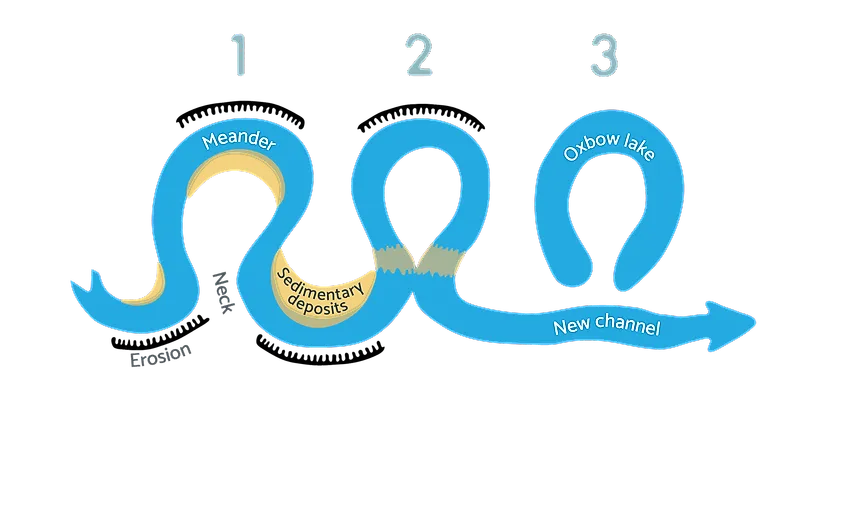
Deposition in lower course → forms floodplains and deltas.
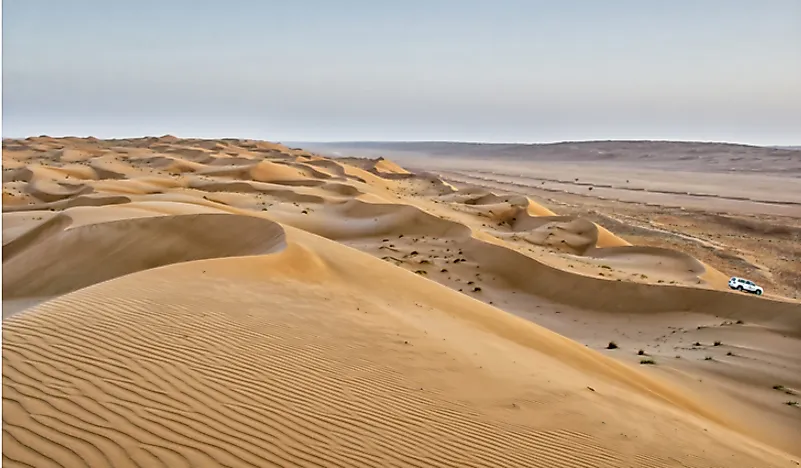
B. Work of Wind:
Common in deserts.
Erosion forms mushroom rocks.

Deposition forms sand dunes and loess (fine dust).
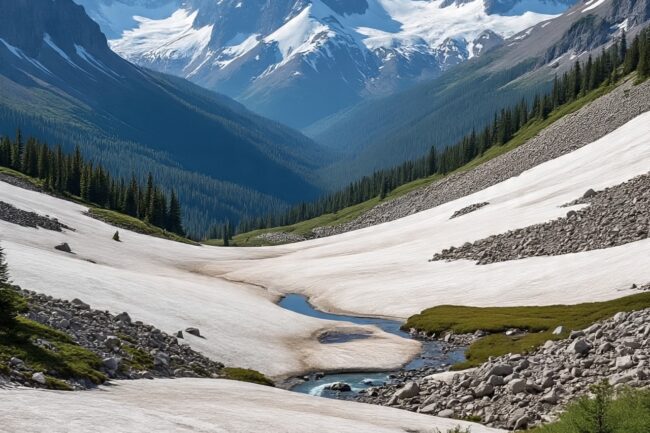
C. Work of Glaciers:
Erode land as they move → U-shaped valleys.
Deposition → moraines (rocks & debris).
D. Work of Sea Waves:
Erosion → forms cliffs, sea caves, arches, stacks.

Deposition → beaches.
Important Terms & Definitions
Term | Meaning |
Magma | Molten rock inside Earth |
Lava | Magma that comes out on surface |
Focus | Origin point of earthquake inside Earth |
Epicentre | Surface point above the focus |
Seismograph | Instrument to measure earthquake vibrations |
Richter Scale | Measures earthquake magnitude |
Meander | Loop-like bend in river |
Ox-bow lake | Cut-off meander loop of a river |
Delta | Fan-shaped fertile area at river mouth |
Mushroom rock | Rock shaped by wind erosion (wide top, narrow base) |
Sand dune | Hill of sand created by wind deposition |
Loess | Fine dust blown by wind and deposited elsewhere |
Moraine | Debris (rocks) left behind by glaciers |
Class 7 SST notes
Our Changing Earth Class 7
Our Changing Earth notes
Class 7 Geography chapter summary
- Class 7 Our Changing Earth notes
